

The Problem We Are Fighting
Child marriage is not a tradition to be preserved. It is a crime, and one that carries consequences that compound across an entire lifetime. Girls forced into early marriage face early pregnancy and its severe health risks, higher rates of maternal mortality, malnutrition, domestic violence, and the permanent curtailment of their education and economic futures. They enter adulthood without having had a childhood. Their children inherit the same disadvantages. Communities that normalise child marriage do not just harm individual girls. They lock themselves into cycles of poverty and exclusion that no single generation can break alone.
India’s 2011 Census recorded 12 million children married before the legal age, of which 5.2 million were girls. The National Family Health Survey of 2019 to 2021 showed the national rate at 23.3%, down from 26.8% in the previous survey, but still deeply, unacceptably high despite decades of laws, programmes, and schemes. In the districts of eastern Uttar Pradesh where Jan Vikas Sansthan works, the problem is not abstract. It is present in villages, in households, and in the lives of girls we know by name.
JVS and the Child Marriage Free India Campaign
Jan Vikas Sansthan is a member organisation of Child Marriage Free India, a nationwide campaign led by women leaders and a coalition of more than 160 NGOs operating across more than 300 districts. The campaign’s goal is to bring the prevalence of child marriage down to 5.5% by 2030, the threshold identified as the tipping point after which society as a whole stops accepting this practice.
In Uttar Pradesh, JVS has led the campaign across Azamgarh district, covering Block Thekma and more than 50 villages under its Access to Justice project. The work spans awareness, community mobilisation, direct prevention, and coordination with government departments and law enforcement. It is not a campaign that arrives, makes noise, and leaves. It is a sustained presence that builds accountability structures within communities themselves.
50+ villages covered across Azamgarh district | 14 children rescued from child labour during action months | 14 FIRs registered in coordination with police and child protection authorities | 10,000+ people reached directly through campaign activities
0
+
villages covered under the campaign
0
+
children rescued from child labour during action months
0
FIRs registered in collaboration with law enforcement
0
+
people reached directly through campaign activities
What the Campaign Looks Like on the Ground
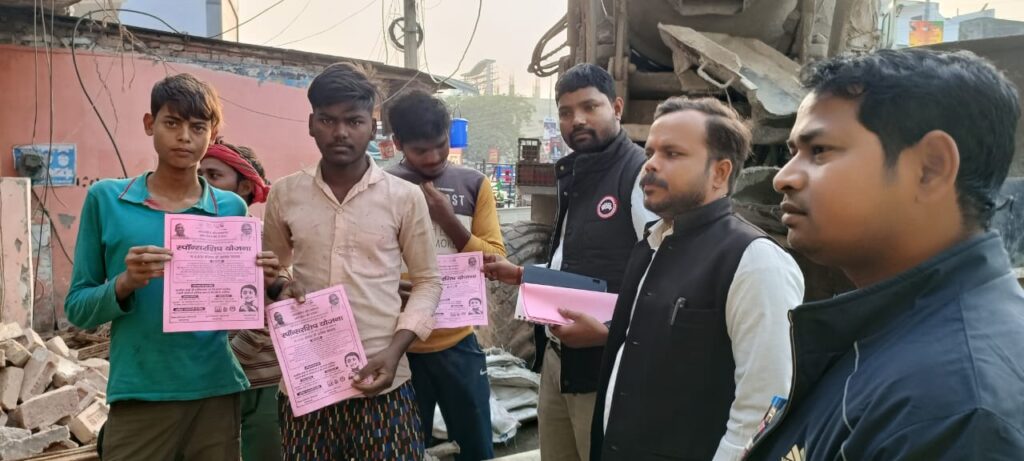
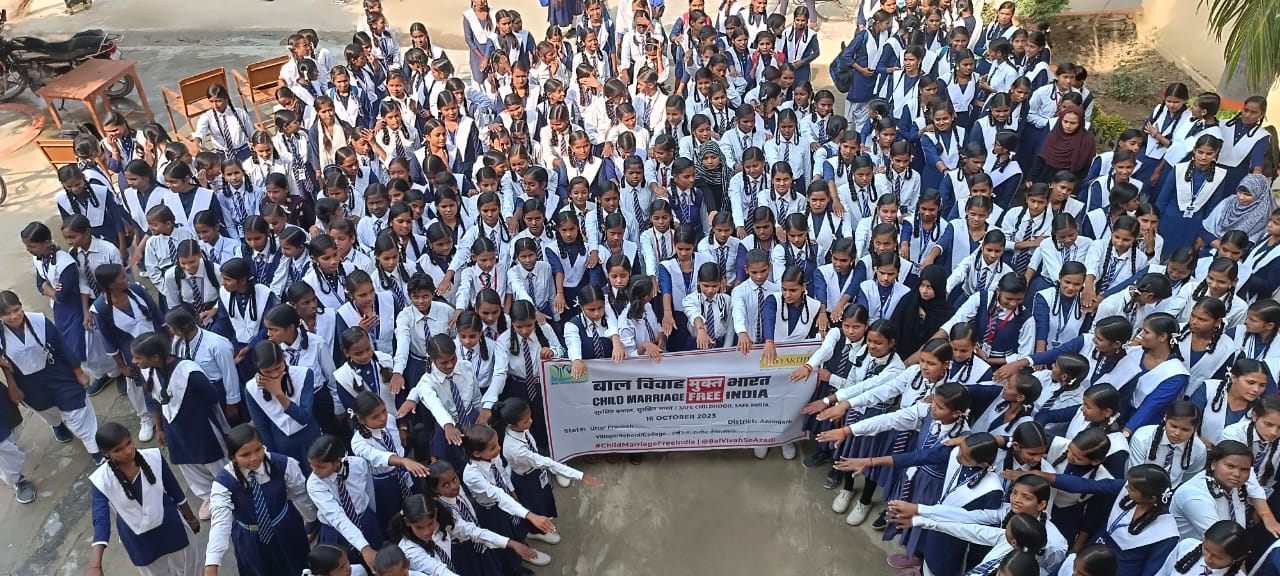
Awareness work is the foundation. Our teams conduct sessions with adolescent groups, women’s collectives, school teachers, students, anganwadi workers, and community members, both men and women, to build a shared understanding that child marriage is illegal, harmful, and preventable. Street theatre performances have been held across all 50 villages, bringing these messages into public spaces where they reach people who might never attend a formal meeting.
June and November are designated action months. During these periods, JVS intensifies its work on child labour, child marriage, child sexual abuse, and trafficking. In Azamgarh, this included identifying and rescuing 14 children from shops and workplaces, with 14 FIRs registered and children produced before the Child Welfare Committee in collaboration with the Dhawa Dal, police, and Childline. The actions were covered by local press, reaching an additional 5,000 people through media.
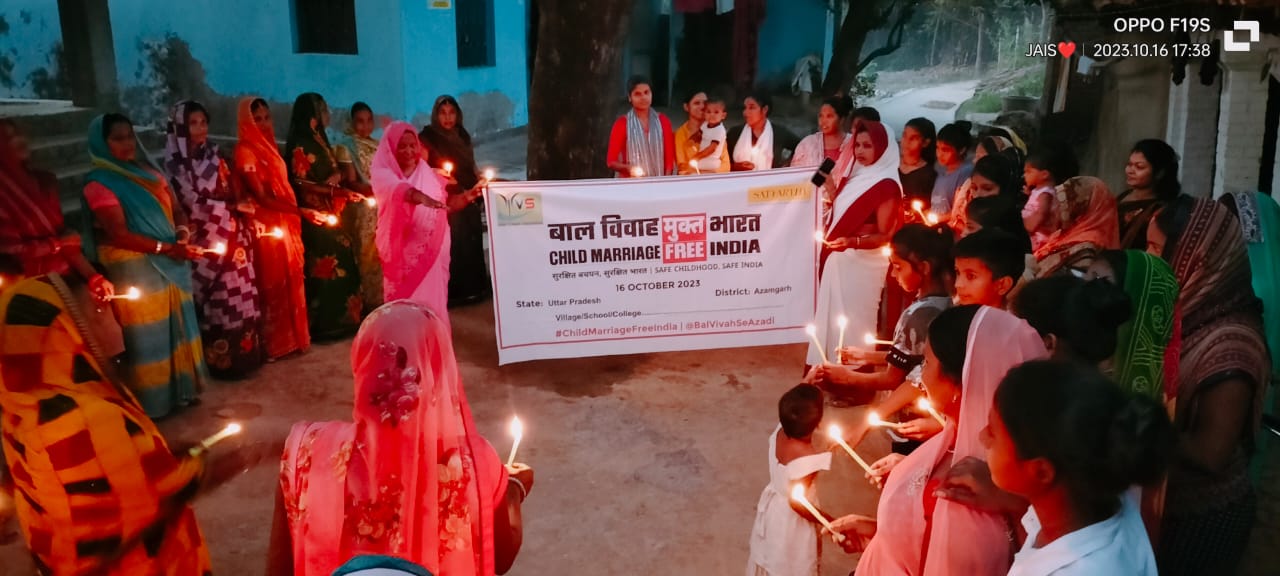
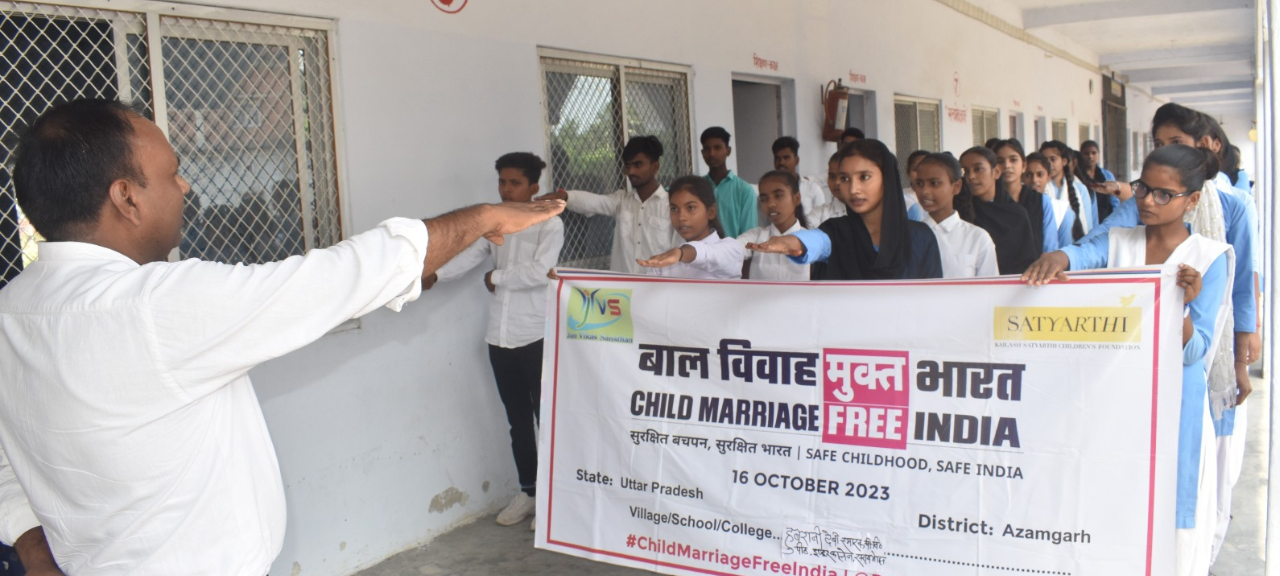
On 16 October 2023, a major campaign event was held simultaneously across more than 50 villages, in collaboration with the Integrated Child Development Services, women’s collectives, adolescent girl groups, school teachers and students, and government officials. Activities included candlelight and torch fire rallies, Prabhat Ferris, a district-level signature campaign from gram panchayat to district office, poster and banner distribution, and a public release of the book “When Children Have Children” by the District Probation Officer, with copies presented to the District Magistrate, Sub-Divisional Magistrate, Superintendent of Police, and other senior officials.
Community accountability has been built systematically. All Mukhiyas and Sarpanches in the area have taken formal pledges and signed commitments to work toward child marriage free panchayats. Child Protection Committees have been formed and strengthened at the district, block, panchayat, and ward levels. Parents have signed undertakings committing not to marry their daughters before eighteen or their sons before twenty one. Wall writing and hoardings at schools, panchayat offices, water tanks, temples, and mosques serve as permanent visible reminders in spaces that communities pass through every day.
Payal’s Story
Payal is sixteen years old, from Jigansandi village in Jahanaganj block, Azamgarh. Her father works at a nearby brick kiln. She lost her mother during the Covid-19 period. One day, she overheard her stepmother telling her father that it was time to arrange her marriage, in part to reduce the household’s expenses. Payal was devastated and had no idea what to do.
She reached out to an aunt, who told her that an organisation worked in the area to prevent child marriage and that she would reach out to them. A few days later, a JVS team member visited Payal’s home and spoke with her parents. He counselled them against the marriage, explained the legal position clearly, and told them that a forced marriage could result in both parents being jailed. Her parents stepped back from the plan. Her stepmother told her father they should instead send Payal to learn tailoring until she turns eighteen.
Payal’s future remains her own. She credits the JVS team entirely. Her story is not exceptional. It is representative of what consistent community presence, combined with legal awareness and the courage of one girl to speak up, can accomplish.
The Way Forward: The PICKET Strategy
Ending child marriage requires more than awareness. It requires a coordinated response across government, institutions, civil society, and communities. The framework guiding this work nationally is drawn from “When Children Have Children: Tipping Point to End Child Marriage,” authored by Bhuwan Ribhu, which identifies 257 high-prevalence districts across India and sets out a district and national level strategy to reach the tipping point of 5.5% prevalence by 2030.
The strategy is built around six interconnected pillars, collectively called PICKET.
Policy for prevention, protection, and prosecution. Existing laws must be enforced consistently, and special laws must prevail over customary or personal laws. Prevention of child marriage must be treated as a non-negotiable policy commitment at every level of the state machinery.
Investment in infrastructure, incentivisation, and institutions. Child protection institutions, education systems, healthcare, justice delivery, and rehabilitation frameworks all require sustained investment. Conditional cash transfers and residential educational facilities for girls at risk have demonstrated impact in keeping girls in school and out of early marriages.
Convergence of departments, governments, and stakeholders at the community level. All schemes and interventions aimed at preventing child marriage and protecting children must operate in coordination with each other. Child participation and empowerment must be at the centre of convergence efforts.
Knowledge that equips all stakeholders to act. When young men refuse to marry minor girls, when girls know they can raise their voice, when parents and community members understand both the harm and the law, collective action becomes possible. Knowledge is what makes every other element of this strategy work.
Ecosystem where child marriage cannot thrive. Changing individual behaviour is necessary but not sufficient. The broader societal ecosystem, norms, peer behaviour, institutional attitudes, and cultural acceptance, must shift. At scale, this requires ecosystem-level transformation, not just case-by-case intervention.
Technology for monitoring and deterrence. Real-time attendance data, early warning systems for dropout and marriage risk, technology-supported awareness campaigns, and the use of artificial intelligence to identify at-risk children are all part of the path forward. Several states have already begun integrating technology into child protection work.
The Goal
Reduction of child marriage to 5.5% by 2030, from a current national prevalence of 23.3%, as proposed in “When Children Have Children: Tipping Point to End Child Marriage” by Bhuwan Ribhu (2023).
Demands of the Campaign
Ensure access to free and quality education for all children up to class twelve, or eighteen years of age, whichever is later.
Dedicated budgetary allocation for schemes and infrastructure for education and vocational training up to class twelve.
Enable real-time attendance data analysis and intervention systems that can flag and act on irregularities before children are lost to the system.
Effective implementation and enforcement of laws against child marriage across all sections of society, without exception.